Vector vs. Raster: Which is Better for Your Design Project?
In the world of digital design, one of the fundamental decisions you’ll face is choosing between vector and raster graphics. Both have unique attributes that make them suited for specific tasks and understand this distinction can significantly enhance the quality of your projects.
**Vector Graphics: The Gold Standard for Scalability**
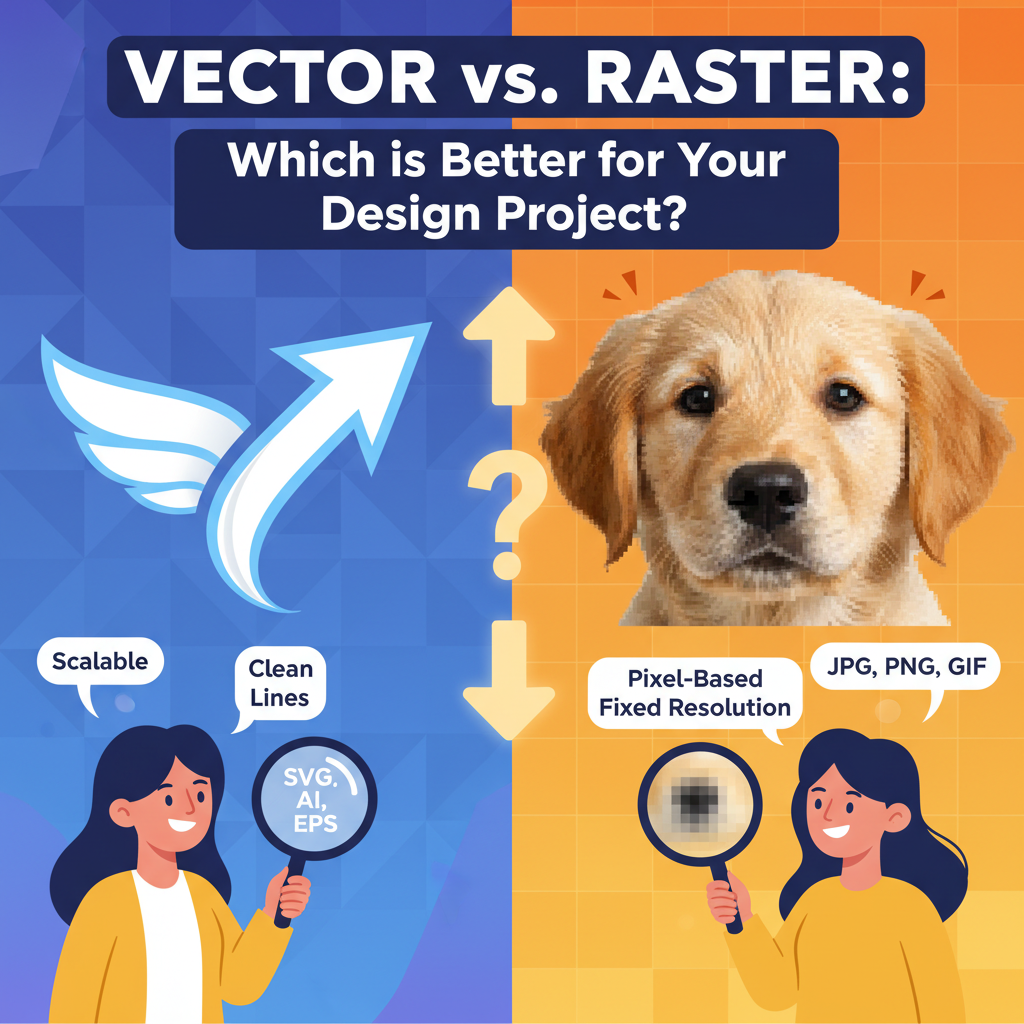
Vector graphics are created using mathematical equations. This means they can be scaled infinitely without losing quality, making them ideal for logos, icons, and any design elements that need to be resized regularly or used across multiple formats. Programs like Adobe Illustrator are tailor-made for working with vectors, offering tools that allow designers to create crisp and clean images that stay sharp on anything from business cards to billboard banners.
**Raster Graphics: Rich Detail and Texture**
In contrast, raster graphics consist of pixels, each carrying a specific color value. This format is essential for projects that require intricate detail and textures, such as photographs or complex digital paintings. Adobe Photoshop is synonymous with raster graphics, offering extensive features for photo retouching, manipulation, and creativity. The finite size of raster images implies that scaling beyond their original resolution can lead to pixelation.
**Choosing the Right Format for Your Project**
Your project’s needs will dictate whether vector or raster is the better choice. For designs that require perfect scalability and clean lines, vectors are unbeatable. For highly detailed and textured images that showcase depth and shadow, raster graphics are ideal.
When designing, consider if your project includes elements that need to be easily resized or if capturing rich, photo-realistic details is your top priority. Ultimately, both formats have their place, and understanding when and how to use them can empower you to create stunning, effective visuals.
Make informed decisions by evaluating the elements of your design project, and leverage the strengths of both vector and raster graphics to elevate your work to new artistic heights.