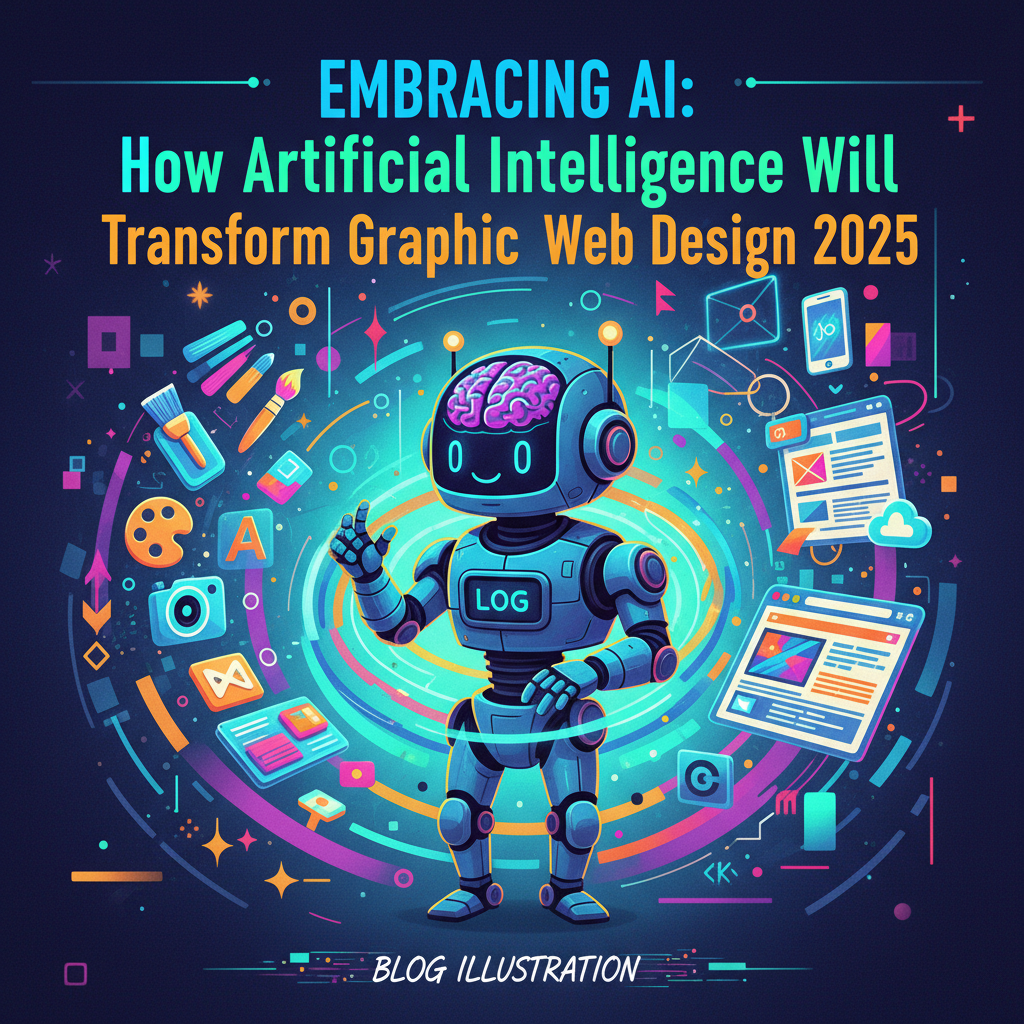
Embracing AI: How Artificial Intelligence Will Transform Graphic and Web Design by 2025
As we rapidly approach 2025, the landscape of graphic and web design is poised for a seismic shift, driven predominantly by the advancements in artificial intelligence (AI). This transformative technology is not only enhancing efficiency but is also pushing the boundaries of creativity in ways previously unimagined.
The graphic and web design industries have historically thrived on innovation, consistently evolving with technological advancements. However, AI represents a leap rather than a step, promising to elevate both the creative process and the end product. Here’s why embracing AI is crucial for designers aiming to remain at the cusp of this revolution.
### Streamlining Workflow
AI’s ability to automate repetitive tasks cannot be overstated. Imagine a world where tedious activities such as resizing images, formatting text, or generating basic layouts are effortlessly handled by algorithms. This automation frees designers to focus on more complex and creative elements, significantly reducing project timelines.
### Personalized User Experiences
Web design is increasingly driven by the demand for personalized user experiences. AI powers sophisticated algorithms that analyze user behavior to craft tailor-made interfaces, ensuring that users not only find what they’re looking for more efficiently but also engage with content in a meaningful way. This customization fosters loyalty and enhances the overall user experience.
### Enhanced Creativity and Innovation
AI tools are making astounding strides in creativity. By analyzing vast datasets, AI can suggest color palettes, design elements, or even complete layout mockups that push creative boundaries. This doesn’t diminish the designer’s role but enriches it, providing a springboard for innovative ideas.
### Improved Accessibility
Designing with inclusivity in mind is essential, and AI is instrumental in creating more accessible web environments. It aids in optimizing content for screen readers, ensuring appropriate color contrast, and maintaining adherence to accessibility standards. As AI continues to develop, we can anticipate even more robust tools for building inclusive designs.
### Predictive Design Insights
With AI’s predictive analytics, designers can harness data to foresee design trends and user preferences. This foresight enables them to make informed decisions that resonate with target audiences, enhancing brand engagement and staying ahead of competitors.
### Conclusion
By 2025, AI is not just anticipated to become a tool designers use, but rather a partner in the creative process. Embracing this change isn’t just about staying relevant but about seizing new opportunities to create work that is smarter, more intuitive, and aligned with user needs.
As we stand at the forefront of this digital evolution, the question for designers is not whether they should adopt AI but how quickly they can integrate it to transform their workflows and creative processes. The AI-driven future of graphic and web design not only promises enhanced efficiency and creativity but also an opportunity for designers to redefine the limits of artistic expression.