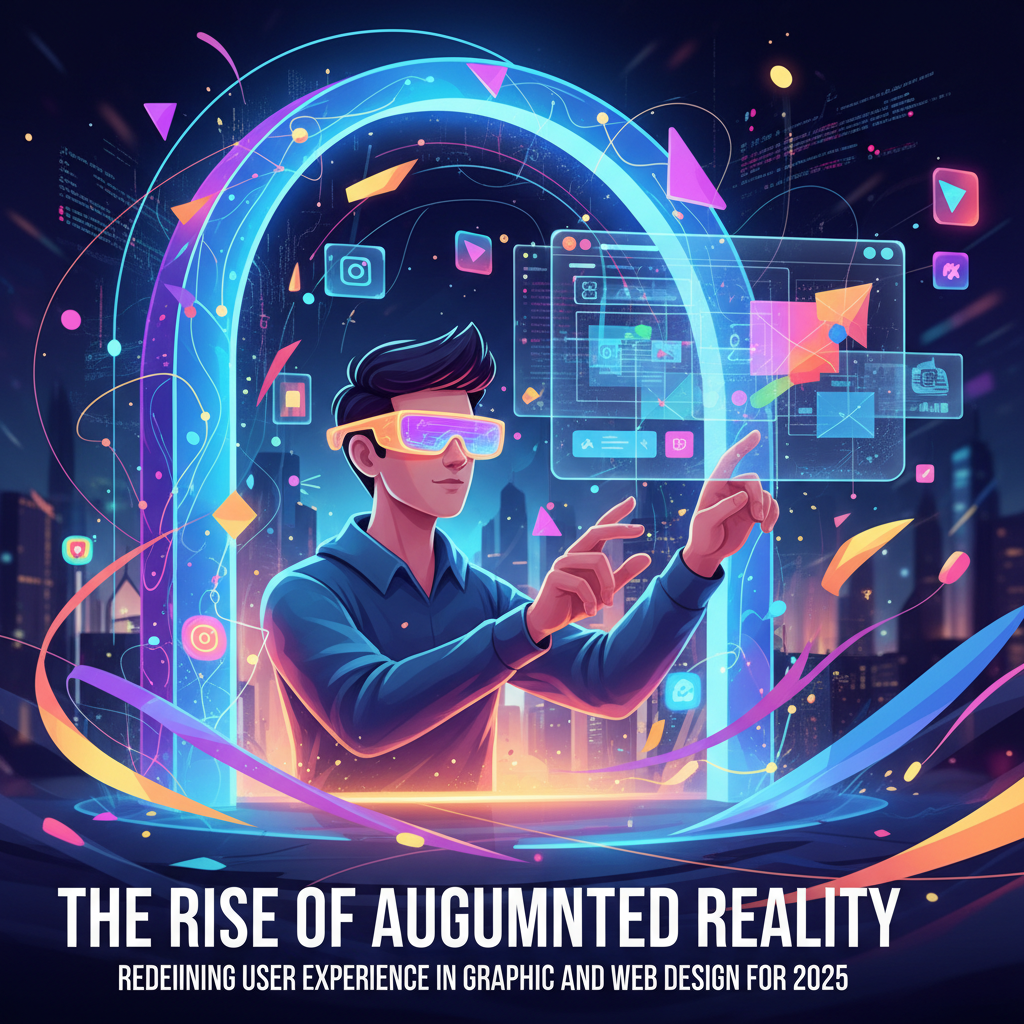
The Rise of Augmented Reality: Redefining User Experience in Graphic and Web Design for 2025
As we approach 2025, the digital landscape is witnessing a seismic shift with the rise of Augmented Reality (AR), reshaping user experiences and breathing new life into graphic and web design. No longer confined to the realms of science fiction, AR is revolutionizing the way we interact with digital content, merging the virtual with reality in ways that are both innovative and immersive.
**Transforming Visual Storytelling**
Augmented Reality offers an unparalleled storytelling platform, where static images and passive web pages give way to dynamic, interactive experiences. Brands can craft narratives that transcend traditional boundaries, allowing users to engage with their content both visually and tangibly. Imagine a fashion brand’s catalog not just showing clothes but allowing users to see how they’d look wearing them in real-time, or a restaurant website offering an immersive tour of their ambiance before you even make a reservation.
**Enhanced User Engagement**
User engagement is fundamentally altered when AR enters the equation. Websites become a stage offering personalized and participatory designs. This not only captivates users but also significantly increases their engagement time, leading to deeper, more meaningful interactions. In 2025, the integration of AR will enable users to perform actions that were once impossible—ordering furniture after viewing how it fits and feels in their living room or interacting with travel destinations before booking an actual visit.
**Breaking Through Design Barriers**
The traditional limitations of graphic design are being crushed under the weight of AR technology, which encourages designers to think beyond flat screens. Concepts can be prototyped and demonstrated in three dimensions, offering a depth of perception and interaction impossible to achieve through conventional design techniques. Designers are now tasked with not only crafting visually stunning art but also ensuring functionality and interactivity that works seamlessly across various devices and environments.
**Integration and Accessibility**
One of the most transformative aspects of AR in web design is its ability to become seamlessly integrated into existing digital ecosystems, enhancing accessibility for all users. Whether it’s through mobile applications or web-based platforms, AR is being designed to be intuitive and user-friendly, ensuring it’s accessible to everyone, regardless of their technological proficiency. This democratization of technology ensures that the leap in user experience is experienced widely, setting a new standard for design accessibility.
**Preparing for the Future**
Graphic and web designers must adapt to keep pace with these advances, investing in new tools and learning about augmented interfaces to keep their skills sharp and relevant. As AR technology continues to evolve, designers are encouraged to experiment and explore its capabilities to harness its full potential.
In conclusion, the rise of Augmented Reality in 2025 is a game-changer that is redefining user experiences in graphic and web design. As the digital and physical realms increasingly overlap, those who embrace AR technology will lead the way in crafting groundbreaking, memorable interactions. This thrilling wave of innovation demands a bold, imaginative approach to design, promising a future where the world around us becomes our canvas.